
Keynote Speakers
(June 30th, 09:00 – 10:15) Algorithmic Problems in Discrete Choice
Speaker: Dr. Ravi Kumar, GoogleAbstract: In discrete choice, a user selects one option from a finite set of available alternatives, a process that is crucial for recommendation systems applications in e-commerce, social media, search engines, etc. A popular way to model discrete choice is through Random Utility Models (RUMs). RUMs assume that users assign values to options and choose the one with the highest value from among the available alternatives. RUMs have become increasingly important in the Web era; they offer an elegant mathematical framework for researchers to model user choices and predict user behavior based on (possibly limited) observations. While RUMs have been extensively studied in behavioral economics and social sciences, many basic algorithmic tasks remain poorly understood. In this talk, we will discuss various algorithmic and learning questions concerning RUMs.
Bio: Ravi Kumar Ravi Kumar has been a research scientist at Google since 2012. Prior to this, he was at the IBM Almaden Research Center and at Yahoo! Research. His interests include algorithms, ML/privacy, and the theory of computation.
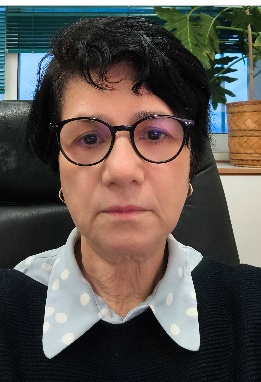
(June 30th, 14:00 – 15:15) On the Many Facets of Fairness and Explainability in Data-Intensive AI Systems
Speaker: Prof. Evaggelia Pitoura, Professor, CEID, University of Ioannina, Lead Researcher, Archimedes Research Unit, ATHENA RCAbstract: As AI systems are increasingly used in domains with societal impact, ensuring fairness and transparency has become a central challenge. In this talk, I will present an overview of our recent research on fairness, explainability, and their interplay, focusing on graph data, graph-based learning tasks, knowledge graphs, and data-intensive AI pipelines. I will discuss how unfairness may arise not only from attributes, but also from graph structure, including connectivity, visibility, and influence. I will then examine how explanations, especially counterfactual and group-level explanations, can support fairness auditing by revealing asymmetric burdens across groups. Finally, I will discuss explainability in retrieval-augmented generation pipelines, where knowledge graphs can provide structured evidence and improve traceability. More broadly, the talk highlights fairness and explainability as connected dimensions of responsible data management, with implications for graph, contextual, and mobile data-intensive systems.
Bio: Evaggelia Pitoura is a Professor in the Department of Computer Science and Engineering at the University of Ioannina and a Lead Researcher at the Archimedes Research Unit, Athena RC, Greece. She holds a BEng degree from the University of Patras, Greece, and MS and PhD degrees from Purdue University, USA. Her research has spanned several areas of data management, from earlier work on mobile data management, including the book Data Management for Mobile Computing, to more recent work on responsible data management, with a focus on fairness, explainability, graph analysis, and data intensive AI pipelines. For her work, she has received best paper awards, a Marie Curie Fellowship, and two ACM Recognition of Service Awards.
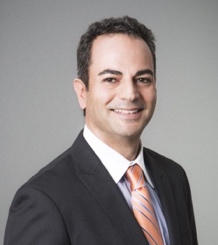
(July 1st, 09:00 – 10:15) Transforming Mobility: From Next-Visit Prediction to a Mobility Foundation Model
Speaker: Prof. Cyrus Shahabi, Professor of Computer Science, Electrical Engineering and Spatial Sciences, and the chair of the Computer Science Department, Director of the Integrated Media Systems Center (IMSC) and the Informatics Program at USC’s Viterbi School of Engineering.Abstract: Understanding where people move, when they move, and why they move is central to applications in transportation, urban planning, public health, and disaster response. In this talk, I introduce TrajGPT, our transformer-based model of human mobility trained in a self-supervised manner on large-scale unlabeled trajectory data and adaptable to multiple downstream tasks, moving toward reusable mobility foundation models rather than task-specific analytics. While TrajGPT demonstrates scalable self-supervised learning and architectural generality, a key remaining challenge is identifying truly transferable foundational units for Spatial AI. I conclude by discussing geospatial objects (GEOs) as a promising direction for learning such representations by integrating mobility, environment, and spatial context, paving the way for next-generation mobility foundation models.
Bio: Cyrus Shahabi is a Professor of Computer Science, Electrical & Computer Engineering and Spatial Sciences; Helen N. and Emmett H. Jones Professor of Engineering; and the director of the Integrated Media Systems Center (IMSC) at USC’s Viterbi School of Engineering. He also served as USC's Thomas Lord Department of Computer Science from 2017 to 2022. He was co-founder of two startups, Geosemble Technologies and TallyGo, which both were acquired in July 2012 and March 2019, respectively. He received his B.S. in Computer Engineering from Sharif University of Technology in 1989 and then his M.S. and Ph.D. Degrees in Computer Science from the University of Southern California. He authored two books and more than three hundred research papers in databases, GIS, and multimedia, and he has over 14 US patents. Dr. Shahabi has received funding from several agencies such as NSF, NIJ, NASA, NIH, DARPA, AFRL, IARPA, NGA, and DHS, as well as several industries such as Chevron, Cisco, Google, HP, Intel, Microsoft, NCR, NGC, and Oracle. He chaired the founding nomination committee of ACM SIGSPATIAL (2008-2011 term) and served as the chair of ACM SIGSPATIAL for the 2017-2020 term. He was an Associate Editor of IEEE Transactions on Parallel and Distributed Systems (TPDS) from 2004 to 2009, IEEE Transactions on Knowledge and Data Engineering (TKDE) from 2010 to 2013, VLDB Journal from 2009 to 2015 and PVLDB (Vol. 16) in 2023. He was PC Co-Chair of PVLDB’2024, founding PC Co-Chair of the first IEEE BigData 2013; founding General Co-Chair of ACM SIGSPATIAL Conference 2007, 2008, and 2009; founding PC Co-Chair of the first IEEE Workshop on Networking Meet Databases (NetDB'05) and founding PC co-chair of the first ACM Workshop on Web Information and Data Management (WIDM'99). He regularly serves on the program committee of major conferences such as VLDB, SIGMOD, IEEE ICDE, ACM SIGKDD, and IEEE ICDM. Dr. Shahabi is a fellow of IEEE and NAI (National Academy of Inventors). He received the ACM Distinguished Scientist Award 2009, the 2003 U.S. Presidential Early Career Awards for Scientists and Engineers (PECASE), the NSF CAREER award in 2002, and the 2001 Okawa Foundation Research Award. He received the ACM SIGSPATIAL 2023 10-Year Impact Award in 2023. He was also a recipient of the US Vietnam Education Foundation (VEF) faculty fellowship award in 2011 and 2012, an organizer of the 2011 National Academy of Engineering “Japan-America Frontiers of Engineering” program, an invited speaker in the 2010 National Research Council (of the National Academies) Committee on New Research Directions for the National Geospatial-Intelligence Agency, and a participant in the 2005 National Academy of Engineering “Frontiers of Engineering” program.